INTRODUCTION
Welcome and thank you for your interest in the FSM Vernacular Language Arts (VLA) curriculum!
The goal of the VLA curriculum is to create a supportive environment where students can learn and grow in their native language, while fostering cultural pride and understanding. Within this framework, students develop the critical skills needed to move confidently between different cultures, settings, and learning opportunities.
This online guide promotes a clear, shared understanding among teachers, students, parents, and the wider community of how the VLA curriculum is implemented in classrooms. It aims to equip teachers with practical tools, resources, strategies, and culturally relevant approaches that honor Micronesia’s rich linguistic and cultural heritage. In doing so, it supports teachers in creating learning environments where students thrive academically and strengthen their identities as stewards of their culture.
IMPORTANCE OF THE VLA CURRICULUM
A very revealing and important TED Talk by Chimamanda Ngozi Adichie titled The Danger of a Single Story tells a story that resonates with many people in the FSM and throughout the Pacific Islands. As a child, this renowned Nigerian author read books in English, as very few were available in her mother tongue. Over time, she began to identify with Western ways depicted in the books instead of the Nigerian ways of her own culture and place.
The FSM Language Policy recognizes a similar problem. A review of available English materials found them unsuitable for instructional purposes, with role model portrayal, language use, and topical issues inappropriate for instruction at early grades. It clearly states that the "materials themselves convey a different set of values and attitudes from what we feel should be emphasized in our early education system."
SUPPORT FOR THE VLA CURRICULUM
As educators, we are tasked with delivering the Vernacular Language Arts (VLA) curriculum all over the FSM. This is a daunting task because local resources are limited, and we are inundated with external materials. This Resource guide aims to support educators in thinking about and using one's own places and cultures as teaching and learning resources. It reminds users to turn first to what is local and accessible, as this will support student learning without having to cross cultural barriers. Finally, it acknowledges that the teachers, students, families, and communities are all their own amazing resources and their knowledge and experience offer “toolkits” for teaching the precious knowledge of Micronesian languages, cultures, and practices. Nevertheless, books, stories, and other written materials remain essential parts of a modern education system and our teachers must be equipped to use them. For that reason, this guide is accompanied by an online Resource library, envisioned as a comprehensive repository of all available educational materials in Micronesian languages, never before so accessible.
CREATED THROUGH PARTNERSHIP
This project was initiated by FSM Department of Education and implemented by Island Research & Education Initiative (iREi) in partnership with Center for Getting Things Started (C4GTS), along with the many individuals, partners, and colleagues whose contributions are gratefully acknowledged here.
ACKNOWLEDGMENTS
Read about government departments, organizations, and individuals who made this possible
The effort to implement this project was coordinated by Lilly Abraham Jonathan of FSM Department of Education (FSM DOE) and led by Danko Taborosi of Island Research & Education Initiative (iREi) and Koh Ming Wei of Center for Getting Things Started (C4GTS). Many partners, friends, and colleagues supported the effort of co-creating this guide and the online library of VLA resources. They helped by looking for materials in libraries, schools, and even in old storage sheds. They carefully scanned delicate pages of old books and articles. And they jumped in when we needed help in loosely translating book titles in the many languages of Micronesia. While we list some of them below, we apologize in advance if we may have forgotten someone and ask that you forgive us. Do know that we are very grateful for each and every one of you.
- Euclene Alexander
- Jillian Breithaupt
- Stuart Dawrs
- Joyminda George
- Fran X. Hezel
- Sandy Keiji
- Eleanor Kleiber
- Scarlett Lebehn
- Diana Manuel
- Steioshy Manuel
- Clémens Mayer
- Aden Suwel
- Janet Suwel
- Modesta L. Tauwl
- Melba Veloso
- Belinda Welles
We are also indebted to staff members of FSM DOE and state FSM DOEs who got involved, to all the authors who graciously contributed their work to be shared with teachers and parents throughout Micronesia, and everyone else who helped.
Thank you, Ka mu magaer, Kinissow, Kalahngan, Kuloh, Gashigeshige, Hosa hachigchig, Wa aerhigerhig, Kilissow, Kaelahngaen, De abodonu, Di mee bolo goe!
MAKING THE MOST OF IT
This Resource Guide is designed to support a creative, dynamic teaching and learning environment where all FSM students can thrive. Developed with both formal and informal educators in mind, it places "place" at the heart of instruction. Formal educators will find helpful connections to standards and assessment tools, while parents and other informal educators are encouraged to enrich VLA learning through everyday use of island languages, cultural practices, and traditions.
And within the Resource Library, everyone – educators and students, from the youngest learners to adults passionate about lifelong learning – will find something to spark curiosity and brighten their day.
HOW TO USE THIS RESOURCE GUIDE?
️️Download the entire Resource guide in the PDF format
See practical tips on making the best use of the Resource guide and maximizing its benefits
This Resource Guide opens with a guiding framework that provides an overarching perspective on Vernacular Language Arts. It then applies this framework to principles of place-based education. Next, the guide presents experiential learning and teaching strategies and suggests ways to adapt them to support curriculum delivery. Color-coding highlights thematic links among the framework, principles, and strategies, helping teachers stay mindful of the four recurring themes throughout the VLA curriculum and keep them central in planning and practice.
After reviewing the above parts individually or with colleagues, teachers may hold small-group discussions and revisit these core parts of the guide. Using the objectives in the guiding framework, they can explore what place-based education means in their local context and compare their reflections with the fundamental principles of place-based education. Following these discussions, teachers can engage with the learning and teaching strategies.
Having explored the above sections thoroughly and inspired by ideas generated through collaboration, educators can consider applying the teaching and learning strategies to the framework and principles, organized by standard.
Teachers will also want to examine the range of available sample teaching and assessment tools, which they print out and use directly or modify for their needs. Though the "toolkit" has a variety of materials, many additional examples and resources exist beyond those included and will continue to emerge as teachers communicate and collaborate.
Teachers are invited to refer to the glossary whenever they come across unfamiliar terms in this guide, the FSM VLA curriculum, or the recommended readings and references.
Finally, before beginning their first search for available VLA materials, teachers are encouraged to consult the guidance below on how to use the Resource Library effectively.
HOW TO USE THE RESOURCE LIBRARY?
️Download a printable PDF version of the tips on how to use the Resource library
See practical tips on making the most of the Resource library and easily finding what you need
The Resource library supporting the National Vernacular Language Arts curriculum is a comprehensive, well-organized online repository of place-based educational materials. Freely accessible to all at https://micronesian.school/library, it provides instant access to a curated collection of books and learning resources – especially those developed in the diverse vernacular languages of Micronesia.
Designed for teachers, educators, and anyone interested in Micronesian culture, language, literacy, and education, the library allows users to view, comment on, annotate, download, and make use of nearly 2,000 resources collected to date. It serves as both a practical teaching tool and a growing digital archive that supports culturally grounded learning across the region.
GETTING STARTED — HOW TO ACCESS THE LIBRARY
To access the Resource library, use the switch at the top of this page and select the option on the right.

To get back to this Resource library, click the left side of the same switch button.
LOCATING RESOURCES – HOW TO FIND WHAT YOU NEED
Once you enter the library page, the system will display the full list of all available resources by default. Use the following options lined up on the left to find materials:
1. Search
-
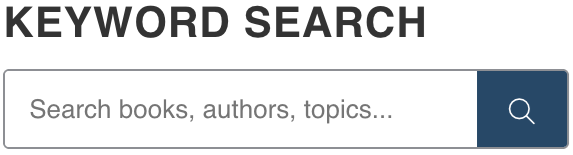
Use the "Keyword search" box to look for resources
by title, author, subject, or any other keyword. The search tool is broad and highly flexible. It retrieves
any
item
whose metadata contains the letter sequence you enter, regardless of where they appear. This makes it easy
to
find
materials even with partial words. If you are unsure of spellings, you can enter just the part of the word
you
know
is correct.
2. Browse
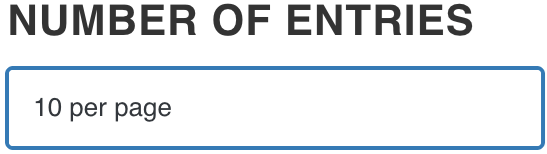
- Whether viewing the full collection or search results, you can use the "Number
of entries" option to select how many items should be displayed on the screen at one time.
- If there are
more
resources available to view than fit on one page as per your settings, click page numbers at the bottom of
the
resource list to browse.

3. Filter
- If you are seeing too many titles and want to narrow them down to
match your needs, you can use one or more of the "Filter results" options.
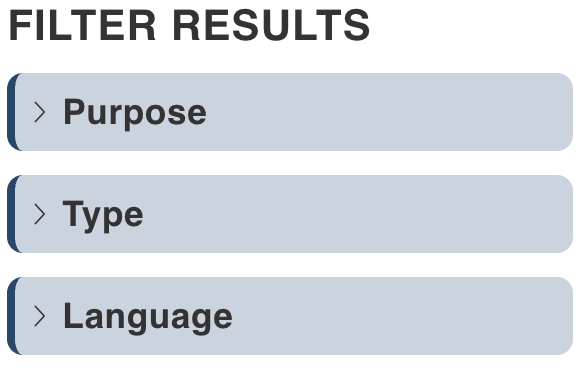
- Clicking any of the filter boxes will reveal a variety of options you can select. For example, you can filter by purpose (e.g. "Concept materials", "Literacy development", "Knowledge expansion"), by type (e.g. "Fictional story", "Folk tale", "Science", "Animal story", "Everyday story" etc.), and by language (e.g., "Yapese", "Satawalese", "Chuukese", "Mortlockese", "Pohnpeian", "Nukuoro", "Kosraean", etc.).
- You can select multiple options simultaneously. For example, you can immediately narrow down the list of available resources to show "Literacy development" materials that are also "Legends" and in "Chuukese" language. This helps if you're seeking resources suitable for a specific language, grade or teaching objective.
4. Sort
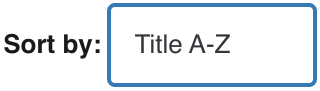
- At any time, you can use the "Sort by" option to arrange the displayed
list of available resources alphabetically by title, chronologically by publication date, and by popularity
(with
most viewed items shown first).
5. Locate
- When you have found the resource you want to examine, click
the "Locate" button to open a new page with more options and details about.

ACCESSING RESOURCES – HOW TO EXAMINE AND USE THE MATERIALS
Once you find a resource of interest, you can view it in detail.
1. Understand availability
- When resources are displayed as a list, they show only the title, publication year, purpose, language, and cover page, if available.
- The only other information shown is the status of each
resource, indicated as follows:



- "Full access" materials represent the bulk of resources in the digital library and can all be downloaded. "Limited access" materials are available for online viewing but not download. "Unavailable" resources appear in the digital library catalog for reference, but their content cannot be viewed or downloaded because of copyright limitations.
2. Get more information
- You can click the "Locate" button for any resource irrespective of the status. This will take you to a new page with more information about the resource and available options to view and download.
- Each resource in the library has its own page with all available information about it. To help with navigating, the page is divided into several sections.
-
"Overview"
part presents the key information about the resource and a brief description of it. It also indicates
how
other
library users interacted with it: views, downloads, ratings, and reviews.

- In the "Overview" part, the names of authors and contributors are clickable. Clicking any name will take the user to the library search page where only books by that person are shown. This is an easy way to find all resources created by a particular individual.
- "Details" part provides additional information about the resource.
- "Library locations" part offers direct links to that same resource as may be available in the major regional libraries: College of Micronesia - FSM, University of Hawai'i, the Micronesian Seminar, and University of Guam. This is very helpful for anyone looking for a physical copy of a resource.
- "Related books" presents lists of other editions of the same book, additional versions of the book in other languages, and any accompanying materials such as teacher's guides, workbooks, etc.
- "User feedback" part offers educators and other users of the library to rate their perceived quality of the resource, write a public review, or enter private notes about it.
3. Use the resources
- To view the resource in full and browse page by page online, simply click the "View PDF" button.

- Alternatively, you can
download the file to your device by clicking the "Download PDF" button.

- If one of both of these options are
lacking for a particular resource, it means that the resource is restricted or unavailable. In that case,
you
are
welcome to reach out to us for more information and we'll do our best to help you find it elsewhere.
PROVIDING FEEDBACK – HOW TO KEEP TRACK AND HELP OTHERS
Once you have had some experience with a particular resource—whether for your personal interest or for classroom use with students—you will likely form an opinion about it. You may find it excellent for a particular purpose, useful with some limitations, or unsuitable for your needs. In that case, you are welcome to provide feedback about it. This feedback can be in the form of a rating, review, or notes.
1. Rate resources
- You can rate a resource by clicking the appropriate number of stars you feel
it deserves, with the 5-star rating being the best.

- Once you click the number of stars you want to assign to a resource, your mark will be combined with those of other users to produce the overall rating for that particular resource. This helps users get a sense of how a particular resource is valued by others.
- You can change the rating you give to a book at any time by clicking a different star.
- You can remove your rating altogether at any time by clicking the same star.
2. Review resources
-
You are welcome to write a review of any resource. To do so, please click the "Review" button. Your feedback helps other educators understand how the material works in real classrooms, making it easier for them to choose tools that fit their needs.

- A helpful review briefly describes how you used the resource, notes its strengths, and points out any limitations or areas for improvement. Thoughtful reviews provide practical insights into the usefulness, clarity, and VLA and cultural relevance of the material.
3. Write notes to self
-
We know that sometimes you want to write your opinion about a resource, but do not wish to share it with others. For that purpose, you have the option of writing notes to self, by clicking the "Notes" button.

- These notes are visible only to yourself and allow you to record quick reminders about how you might use a resource in the future or what to adjust next time.
4. Share and bookmark resources
-
You may also want to share a resource with another teacher who would benefit from it—simply click the "Share" button and either copy the direct link to send by email or message, or share the provided QR code.

- You can also save a resource for easy access later by clicking the 'Bookmark' button.

REGISTRATION AND LOG IN – HOW TO MAKE THE MOST OF IT
Some of the options described above—specifically download, ratings, reviews, notes, and bookmarks—are available only to registered users. You must be logged in to access these features. The first time you try to use any of them, or when you click the "Log in", you will be prompted to log in or register.

- Registration is simple and requires only your name, email address, and a password you create.
- If you don't have an email address, you can use a non-working one and you will still be able to register and fully access all site features. This flexibility ensures that teachers who do not regularly use email can still access the site. Please note that without a working email, you cannot reset your password if forgotten.
We hope you will take full advantage of the Resource library, enjoy exploring it, and make use of its books and other educational materials to support your interests and teaching needs.